Microlaunch Alternatives Compared: Which Launch Platform Is Actually Worth It?
Microlaunch alternatives compared: 11 launch platforms ranked on distribution, longevity, and signal quality — plus what to use instead of a leaderboard.


Search "Microlaunch alternatives" and you'll mostly find directory-of-directories content — lists of ten platforms with the same three lines about each one, reshuffled. That's not this. This is a founder-level breakdown of what Microlaunch actually does well, where it runs out of road, and what the strongest alternatives — including the one built to solve the problem none of these platforms solve — actually get you.
Here's the short version of why this question comes up at all: Microlaunch is a 30-day cohort model built around community "roasts," a leaderboard, and a Paddle checkout for paid submissions. It's a genuinely useful first stop for market validation.
But a launch platform, by design, answers one question — "where do I post this?" — and stops there. It doesn't tell you what to do with your first 100 users, whether your channel mix even matches your product, or what your launch week should look like before you've built anything to submit. That gap is where most founders get stuck, and it's the gap this article is really about.
How we're evaluating these
Every platform below is scored against the same four questions, because "best" depends entirely on what you're optimizing for:
- Distribution: how many relevant eyes does a launch actually reach, beyond friends-and-family votes?
- Longevity: does the value disappear the day your cohort ends, or does the listing keep working for you (SEO, backlinks, AI-answer citations) months later?
- Signal quality: is the feedback and traction real, or is it upvote theater?
- What happens next: does the platform help you sequence your launch, or is it purely a submission form?
Most directories score well on one or two of these and poorly on the rest. That's not a knock on any individual platform — it's just the nature of a tool built around a single moment rather than a full launch cycle.
Quick comparison
| Platform | Best for | Launch window | Life after launch day | Starting price |
|---|---|---|---|---|
| SuperLaunch | Founders who want a real strategy, not just a listing | Personalized, not date-locked | Ongoing — Launch Coach, curator ranking, SuperReviewers community | Free listing; $29 one-time for reviews |
| Microlaunch | Micro-SaaS founders wanting a month-long feedback cycle | 30-day cohort | Leaderboard listing, limited long-tail visibility | $39–49 |
| Uneed | Indie makers wanting Product Hunt-style exposure, less competition | Daily launch feed | Permanent listing | Free / paid boost |
| Peerlist Launchpad | Developers and designers already active on Peerlist | Weekly, Mon–Fri | Profile-linked, decent long-tail | Free |
| BetaList | Pre-launch products building a waitlist | Rolling submissions | Early-access page, not a growth engine | Paid only |
| TinyLaunch | Weekend builds and first-time public launches | Rolling, low-pressure | Small, friendly community; limited reach | Free / low-cost |
| Smol Launch | A calmer, week-long alternative to a 24-hour PH launch | Weekly cohort | Directory listing | Free / paid |
| StartupBase | Founders who want visibility beyond a single launch day | Rolling submissions | Persistent product page, collections, rankings | Free / paid boost |
| PeerPush | Founders optimizing for AI-assistant discoverability | Rolling submissions | Evergreen page built for LLM citation | Free / paid |
| Fazier | AI-tool builders wanting a less saturated discovery feed | Daily launch feed | Permanent listing | Free / paid |
| Hacker News (Show HN) | Technical, developer-first products | Anytime, self-serve | None built in — you're on your own after | Free |
1. SuperLaunch - the pick for founders who want a strategy, not just a listing
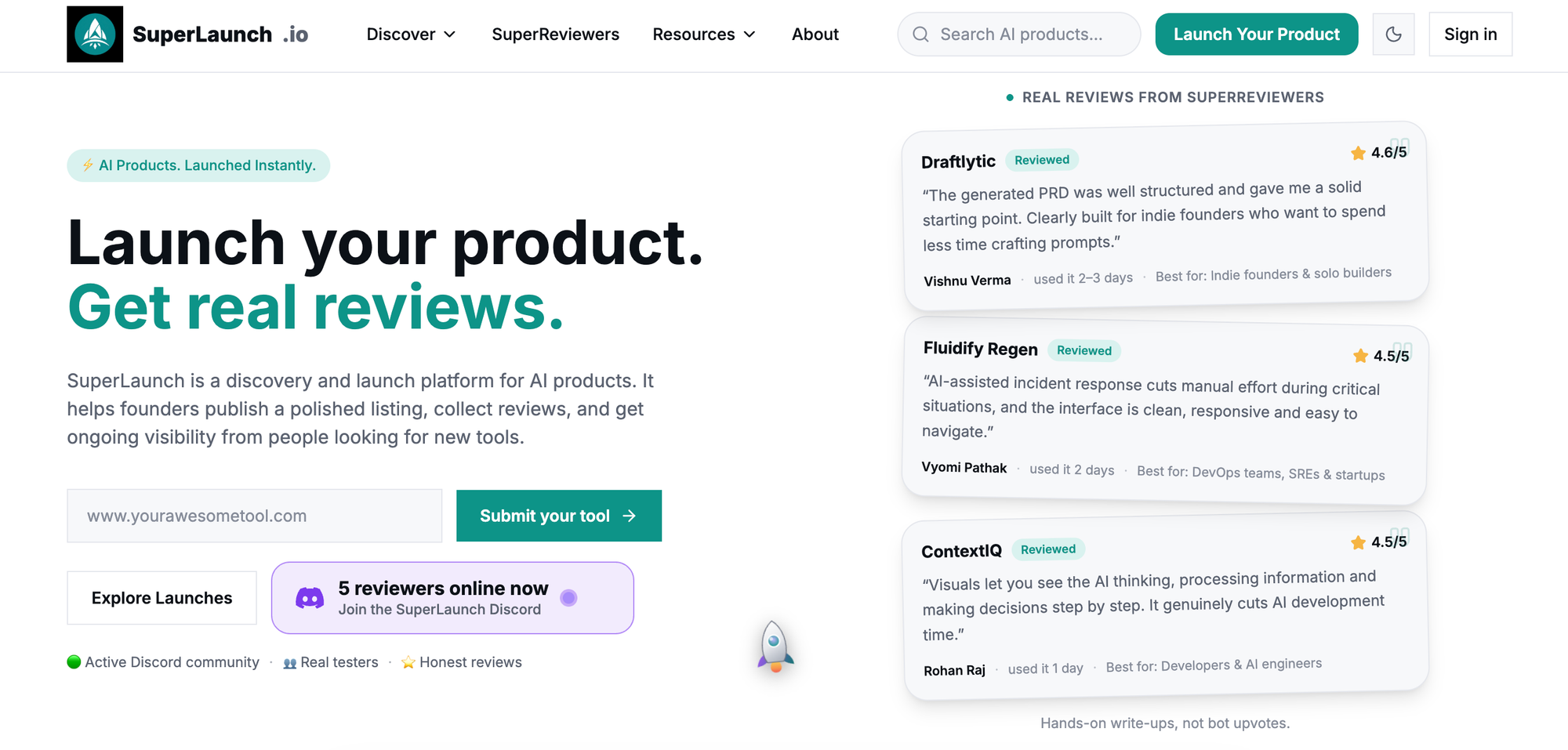
Every platform on this list answers "where do I post my launch?" SuperLaunch is built to answer a different question: "what should I actually be doing this month, given my product, my resources, and my goals?" That difference is the whole point, and it's worth walking through in some detail because it's easy to undersell in a single paragraph.
The diagnosis comes before the distribution. You start with a founder onboarding flow — what you've built, your current situation, the resources you actually have (time, budget, existing audience), and your goals. A diagnosis engine scores your constraints across dimensions like distribution, proof, positioning, and time pressure, then matches you to one of a set of launch archetypes built for founders in your specific position — a founder-led, community-first launch looks nothing like an audience-activation-plus-proof launch, and SuperLaunch doesn't pretend one script fits both.
You get a real report, not a checklist. The output is a full launch strategy report: a diagnosis of where you actually stand, your top three priorities, an explicit list of what not to spend time on (arguably the more valuable half), a weighted channel mix instead of "post everywhere," a day-by-day runbook, success metrics, and decision rules for when to pivot mid-launch.
It converts into execution, not inspiration. The report becomes a Launch Board of scoped tasks — what, why, how, expected time, success criteria, dependencies — pulled from a curated task library rather than freshly hallucinated by an AI for every user. That's a deliberate choice: the strategy engine runs first and decides what you need, and AI is used to personalize and explain it, not to generate generic advice that reads the same for every founder who signs up.
The distribution layer is still there. SuperLaunch also runs a curator-controlled product directory (migrated away from a pure-upvote model specifically to keep rankings honest), the SuperReviewers founding community on Discord for real feedback before you go wide, and a free 202-site backlink directory so you can plan your broader submission strategy — including which of the other platforms on this page are actually worth your time for your specific product.
The listing itself has a free path: a permanent SuperLaunch page, a do-follow backlink, and a social shoutout, published on a standard review queue.
Real SuperReviewer feedback, though, is a paid feature — the one-time $29 Launch Plus tier is what gets you off the queue (live within 24 hours), 5–10 actual feedback responses from SuperReviewers matched to your niche, and a founder story feature in the Behind the Launch newsletter. If feedback is the reason you're launching in the first place, budget for the $29 rather than expecting it on the free plan.
Best for: founders who've already run a directory launch or two and felt the "now what?" gap, or first-time founders who'd rather have a plan than guess.
2. Microlaunch
Microlaunch is a solid 30-day cohort model: your idea and your product are scored separately, the community "roasts or boosts" what you ship, and Paddle handles checkout if you go with a paid submission ($39–49). The month-long window is a genuine advantage over single-day formats — it gives slower-building products more time to gather real reviews instead of living or dying in 24 hours.
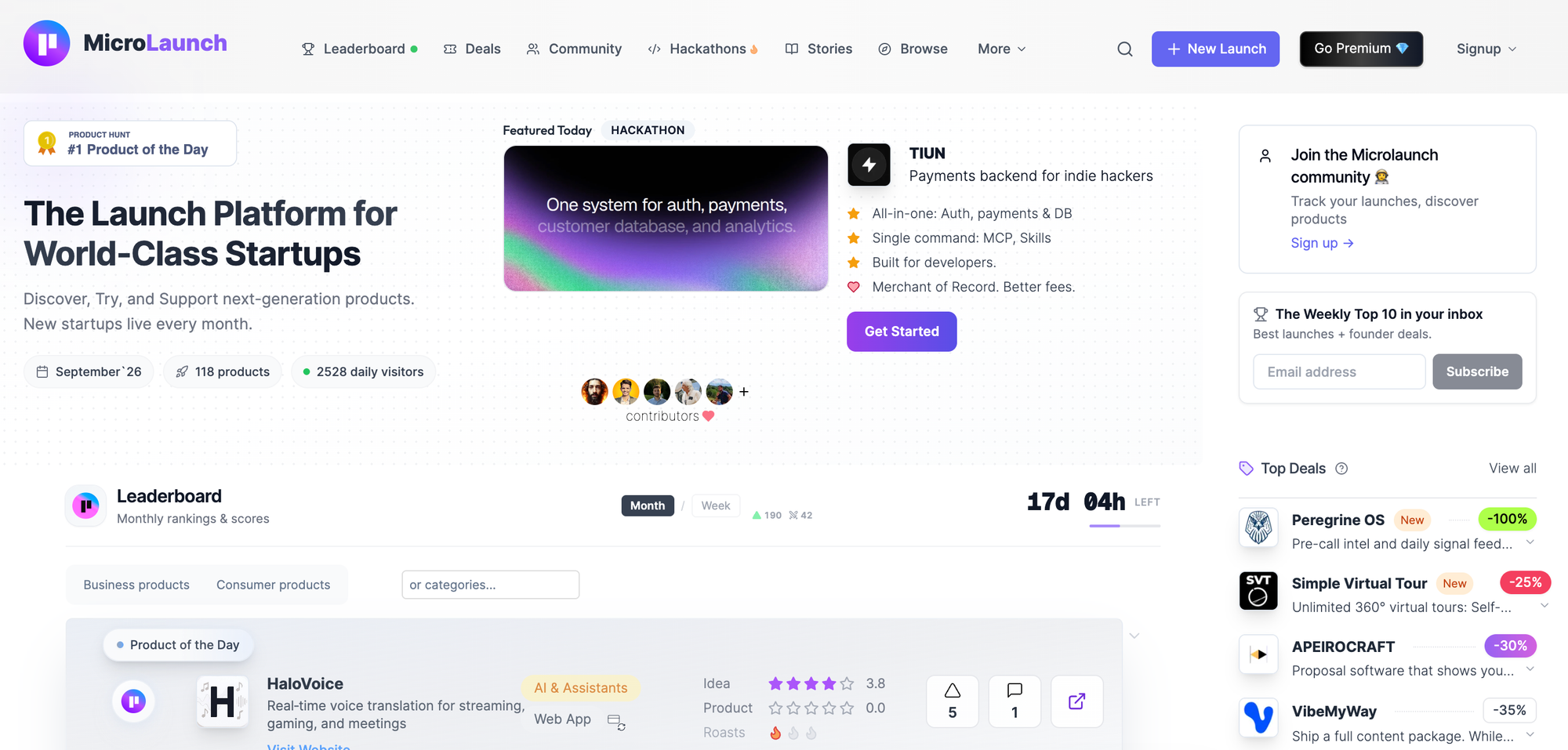
The trade-offs show up after the cohort ends. There's no built-in plan for what comes next once your 30 days are up, inclusion criteria for the curated sections aren't always transparent, and — like most directories — the value is front-loaded into launch month rather than compounding afterward. It's a good input into a broader plan; it isn't the plan itself.
Also read: 10 Best Product Hunt Alternatives in 2026 (Honest Reviews)
3. Uneed
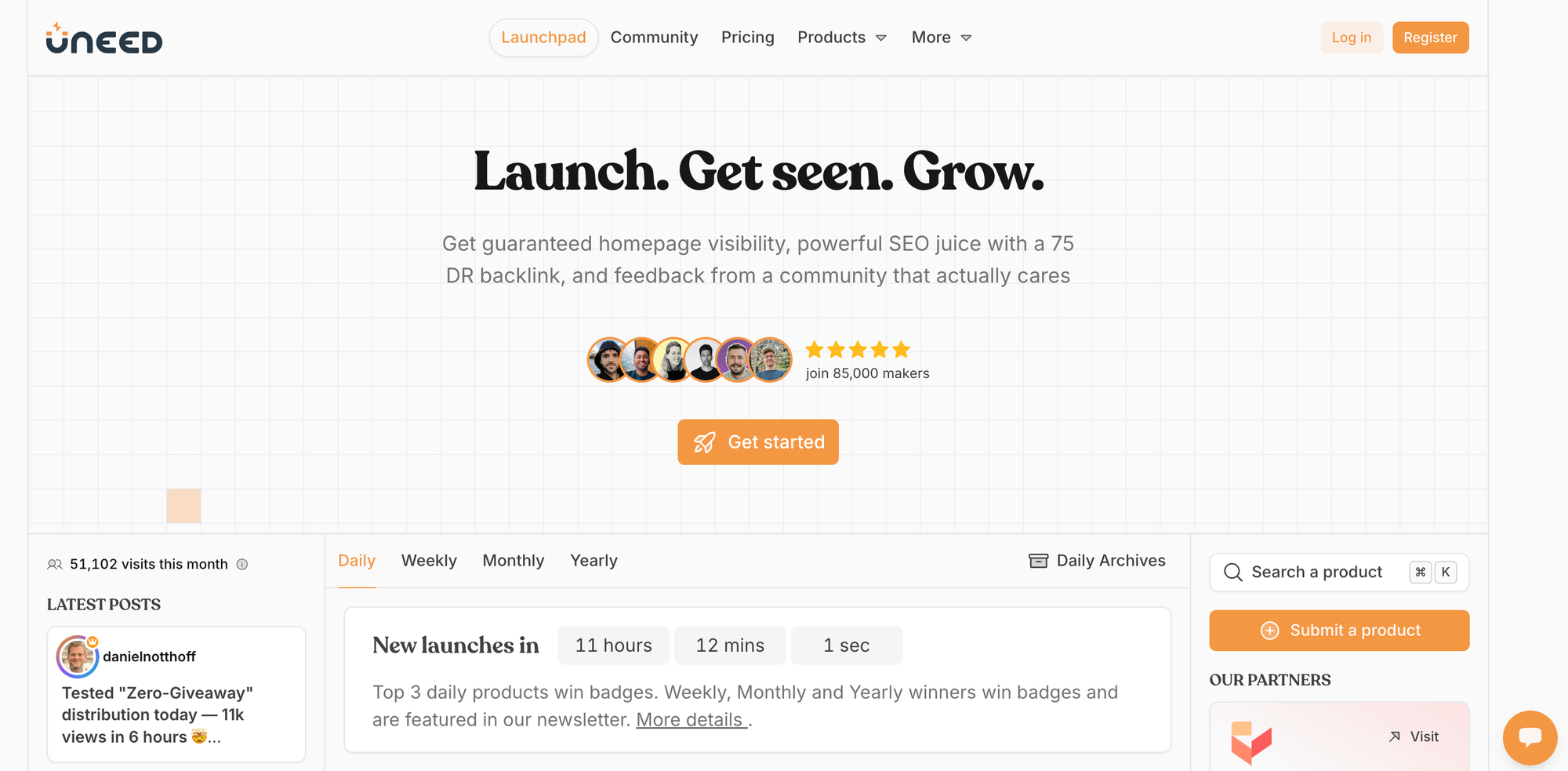
Uneed runs a daily launch format similar to Product Hunt, but with a smaller and more engaged voting community, which makes it meaningfully easier for a new product to actually rank instead of getting buried by lunchtime. Listings stay up permanently, so it doubles as a lasting backlink and discovery page rather than a one-day spike. The ceiling is lower than Product Hunt's best days, but the floor is much higher for a product without an existing audience.
Also read: Futurepedia Alternatives: 7 AI Tool Directories Worth Your Submission
4. Peerlist Launchpad
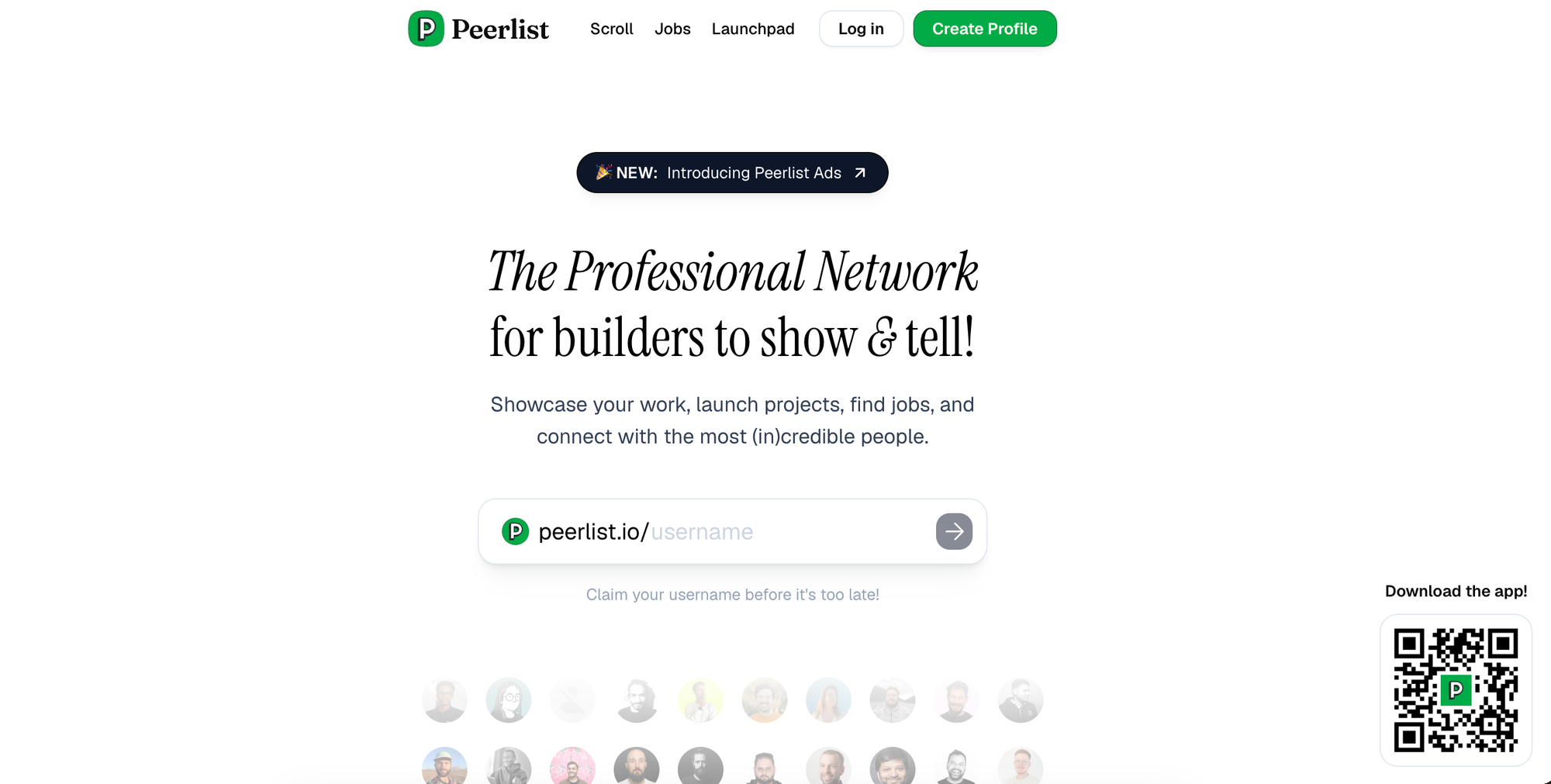
Launchpad is the launch board built into Peerlist, a professional network for developers and designers. Launches open Monday and run through the entire week, so you're judged on a full launch window rather than a single Pacific-time deadline. It's a strong option if you already have a presence on the platform — the audience is genuinely technical, and votes tend to come from people who'd actually use a dev tool, not from generic upvote exchanges.
Also read: 7 TAAFT Alternatives for AI Tool Launches
5. BetaList
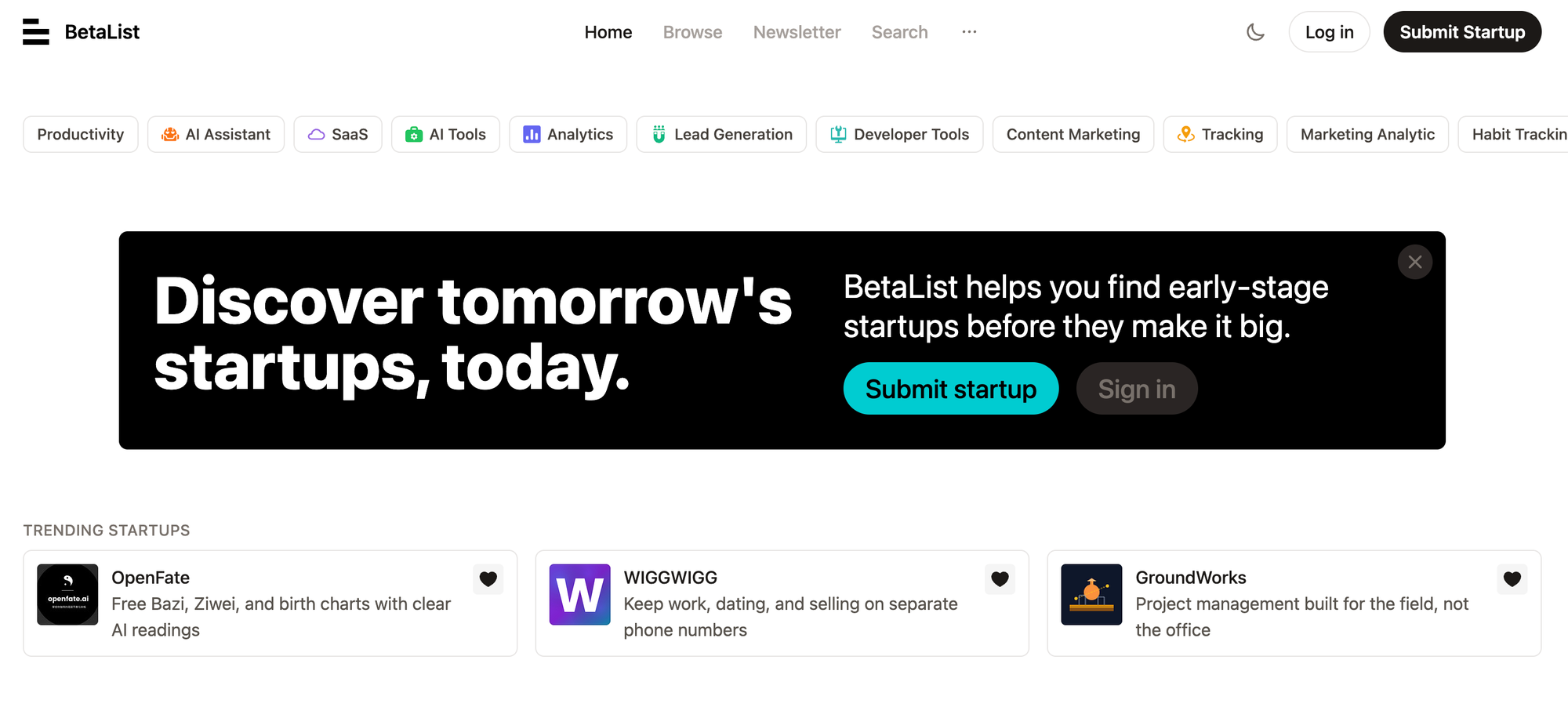
BetaList is built for products that aren't fully live yet. It functions less like a launch platform and more like a waitlist-and-validation tool — genuinely useful for gathering early signups and directional feedback before you're ready for a bigger public push. Once you actually have paying customers to chase, though, it stops being the right tool; there's no growth mechanism built past the initial signup page.
Also read: 7 BetaList Alternatives to Get Your Startup in Front of Early Users
6. TinyLaunch
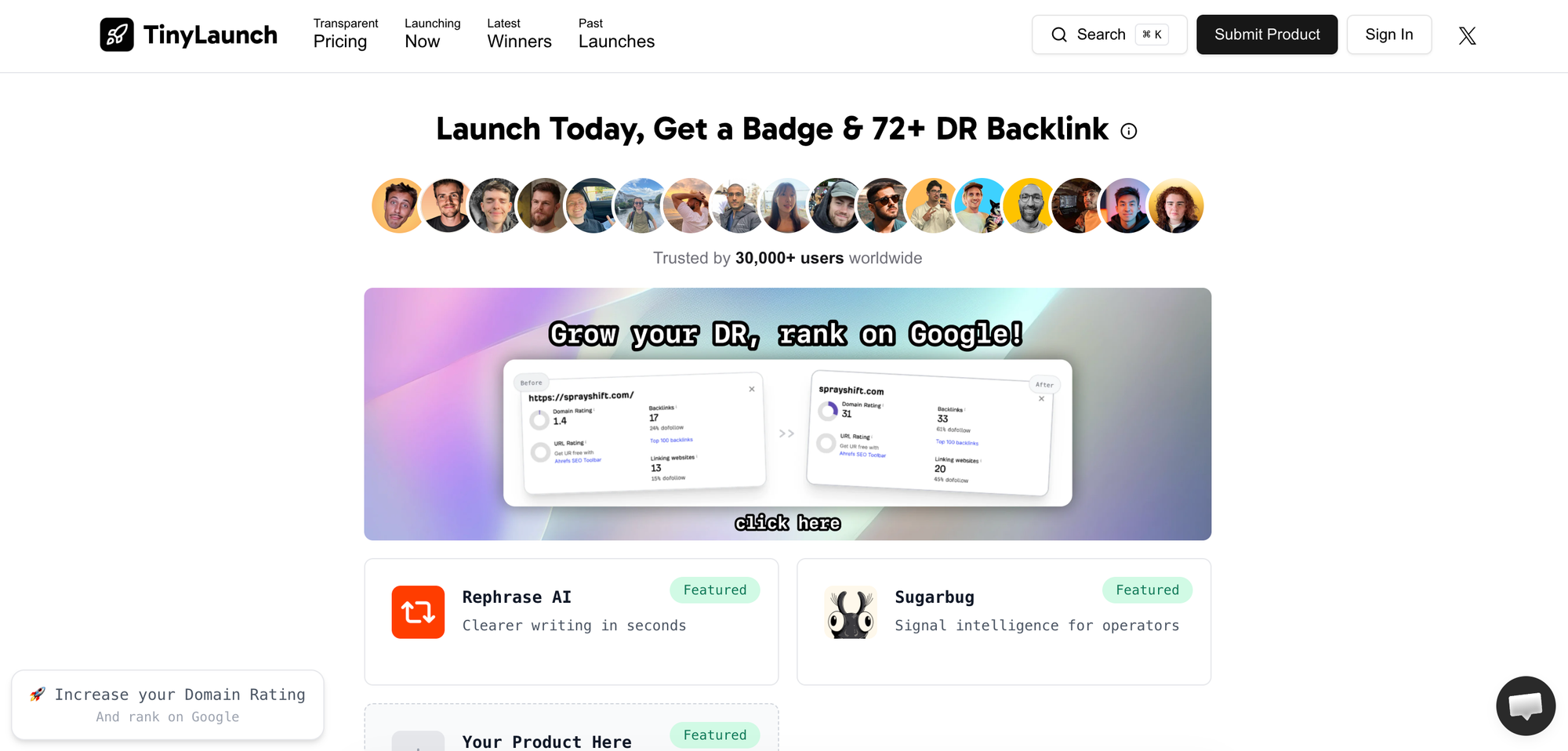
TinyLaunch is the low-pressure option: a smaller, friendlier maker audience, no leaderboard arms race, and a good fit for a first-ever public launch or a genuinely small side project that would get lost among more "serious" micro-SaaS submissions elsewhere. The reach is limited — this is a warm-up round, not a growth channel — but so is the intimidation factor, which matters if fear of a bad launch is the thing actually stopping you from shipping.
7. Smol Launch
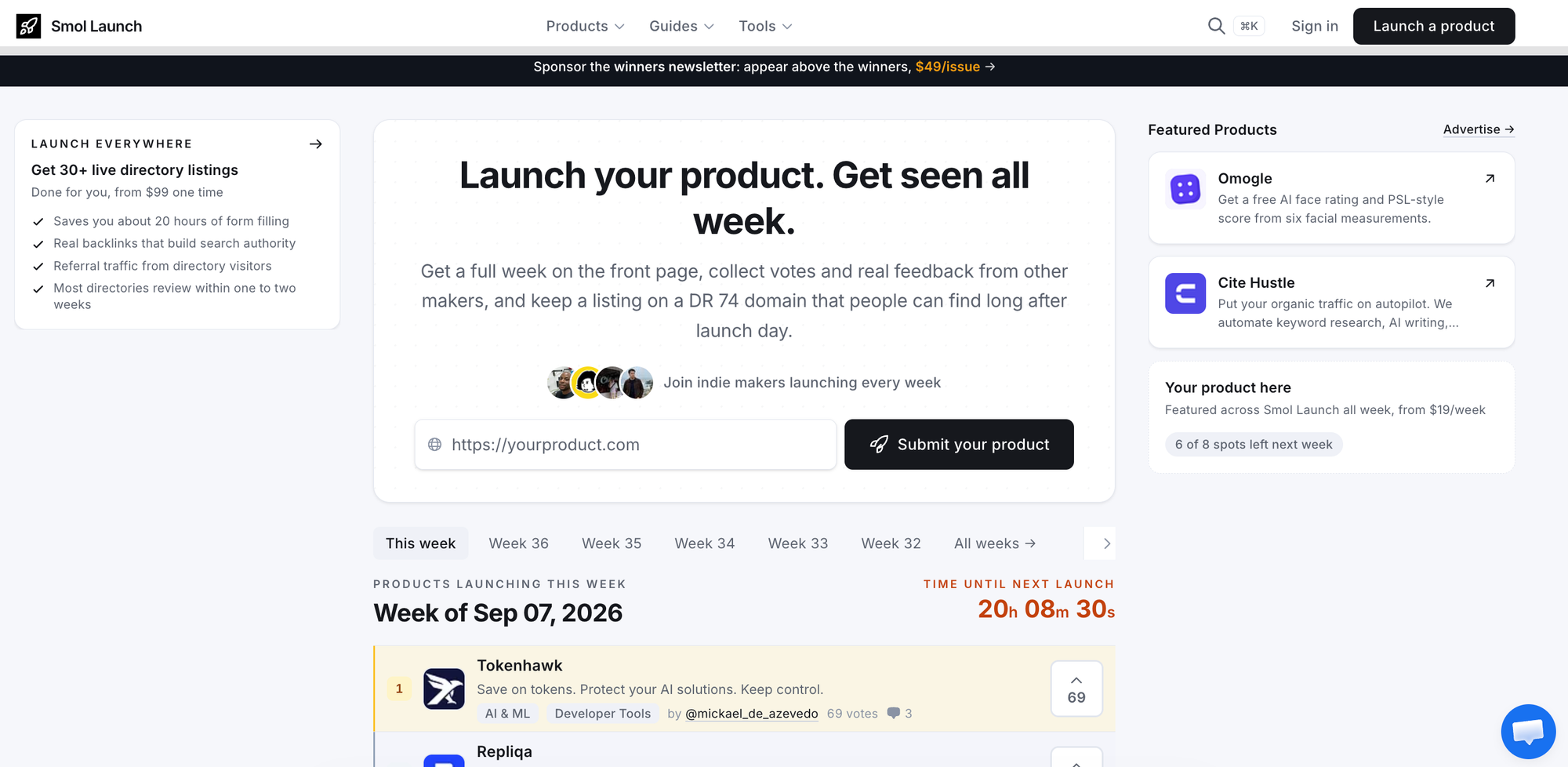
Smol Launch trades Product Hunt's 24-hour cliff for a full week of visibility in a smaller indie-maker cohort, which softens the all-or-nothing pressure considerably. It's a reasonable warm-up round before a bigger launch elsewhere, though functionally it's still a directory listing — useful for backlinks and a first wave of feedback, not a substitute for a broader plan.
8. StartupBase
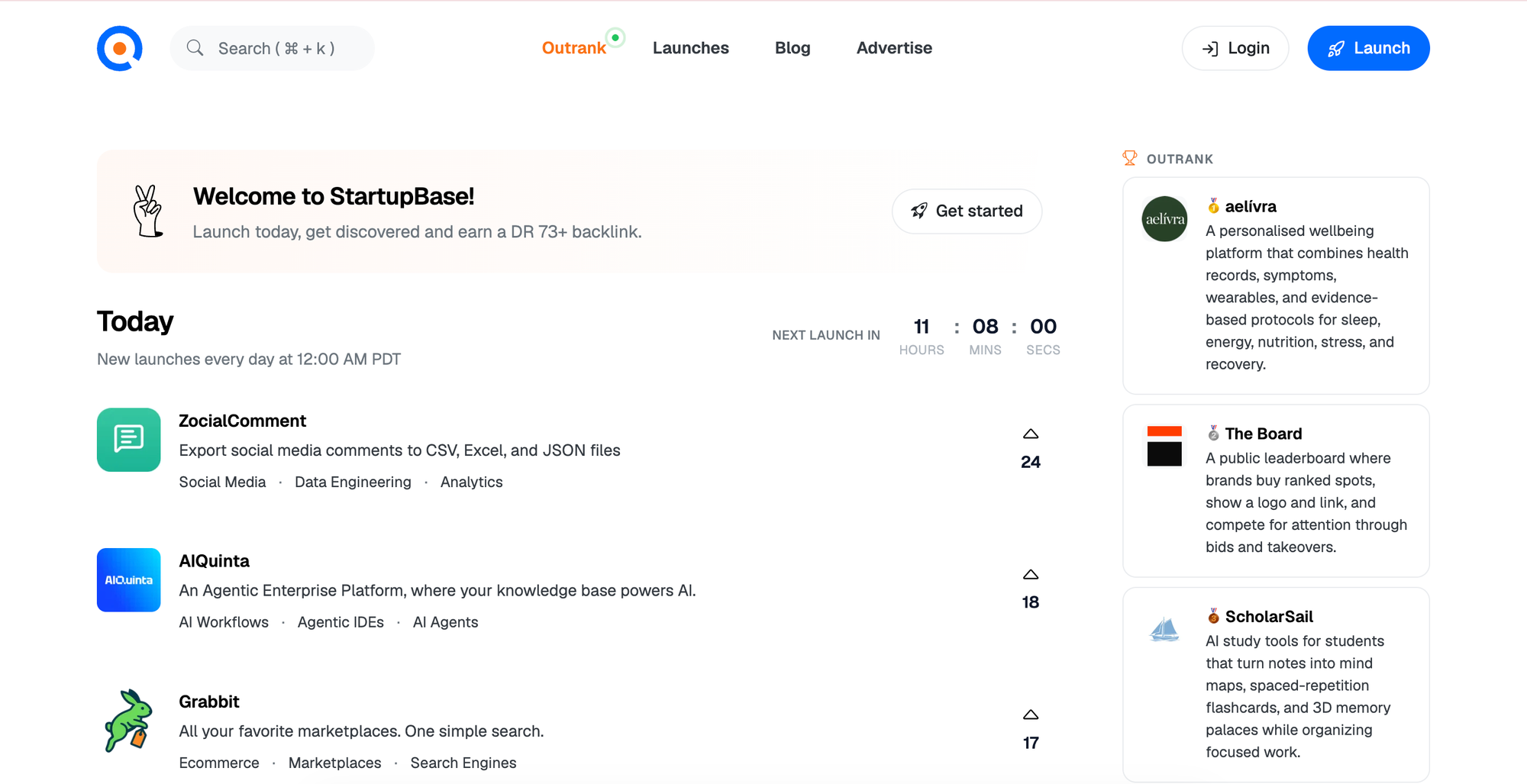
StartupBase leans harder into persistence than most launch-day platforms: product pages, collections, and rankings that keep working for you long after the initial submission, rather than resetting to zero once the launch-day feed moves on. It's a reasonable pick if your main complaint about other directories is that the traffic evaporates within a week.
9. PeerPush
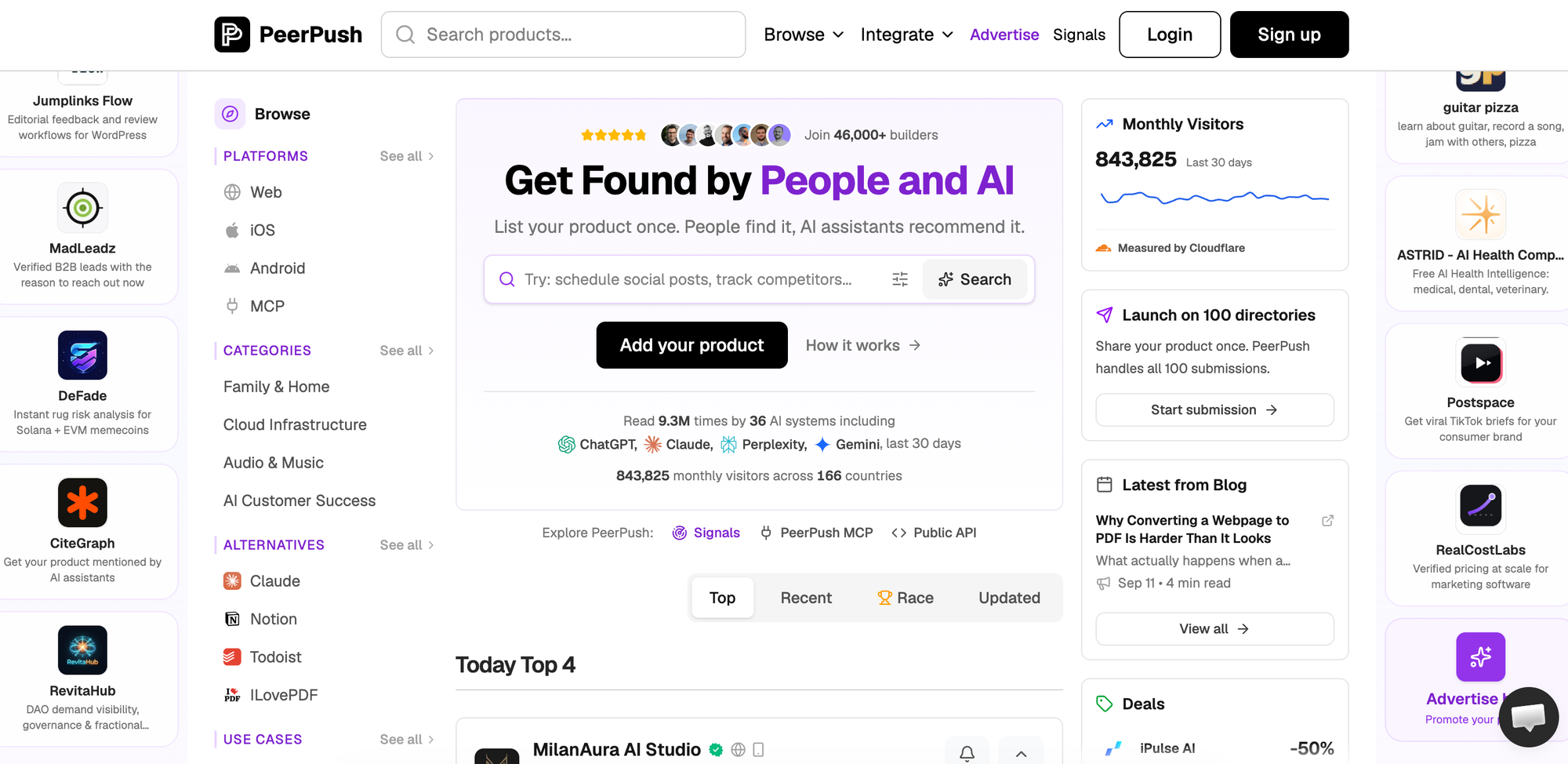
PeerPush is built around a trend that matters more every quarter: a growing share of product discovery now happens inside AI assistants, not launch-day leaderboards. When someone asks ChatGPT or Perplexity "what's the best tool for X," the answer comes from structured, evergreen, well-cited pages — not a ranking that reset months ago. PeerPush optimizes specifically for that kind of long-term citability, which makes it a useful complement to (not a replacement for) a launch-day platform.
10. Fazier
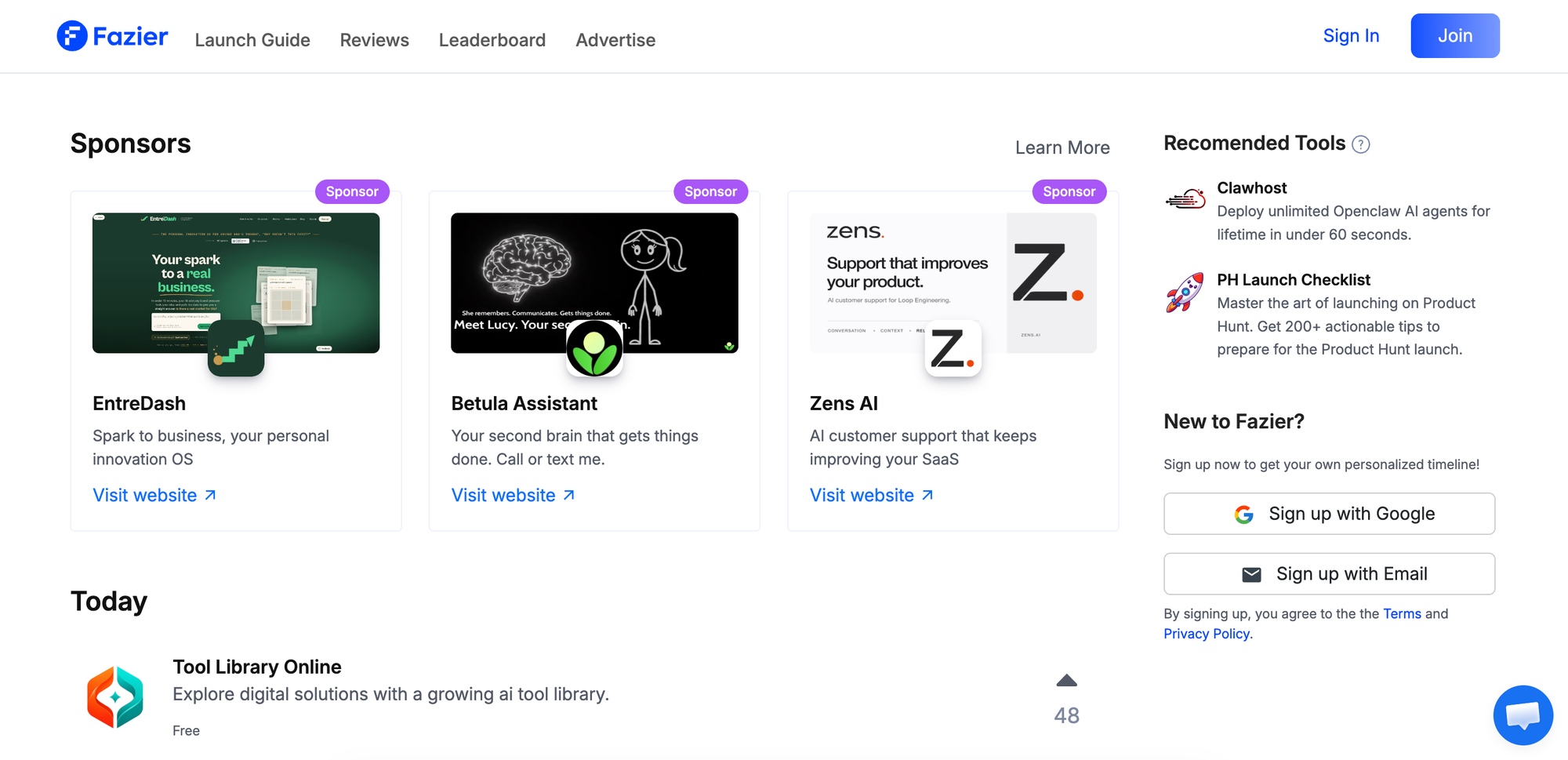
Fazier is a discovery platform with a specific lean toward AI tools and products, and it's noticeably less saturated than Product Hunt's general feed. If your product is AI-adjacent and you're competing for attention against hundreds of similar launches on the bigger platforms, a less crowded, more targeted feed can be worth more than a bigger but noisier audience.
11. Hacker News (Show HN)
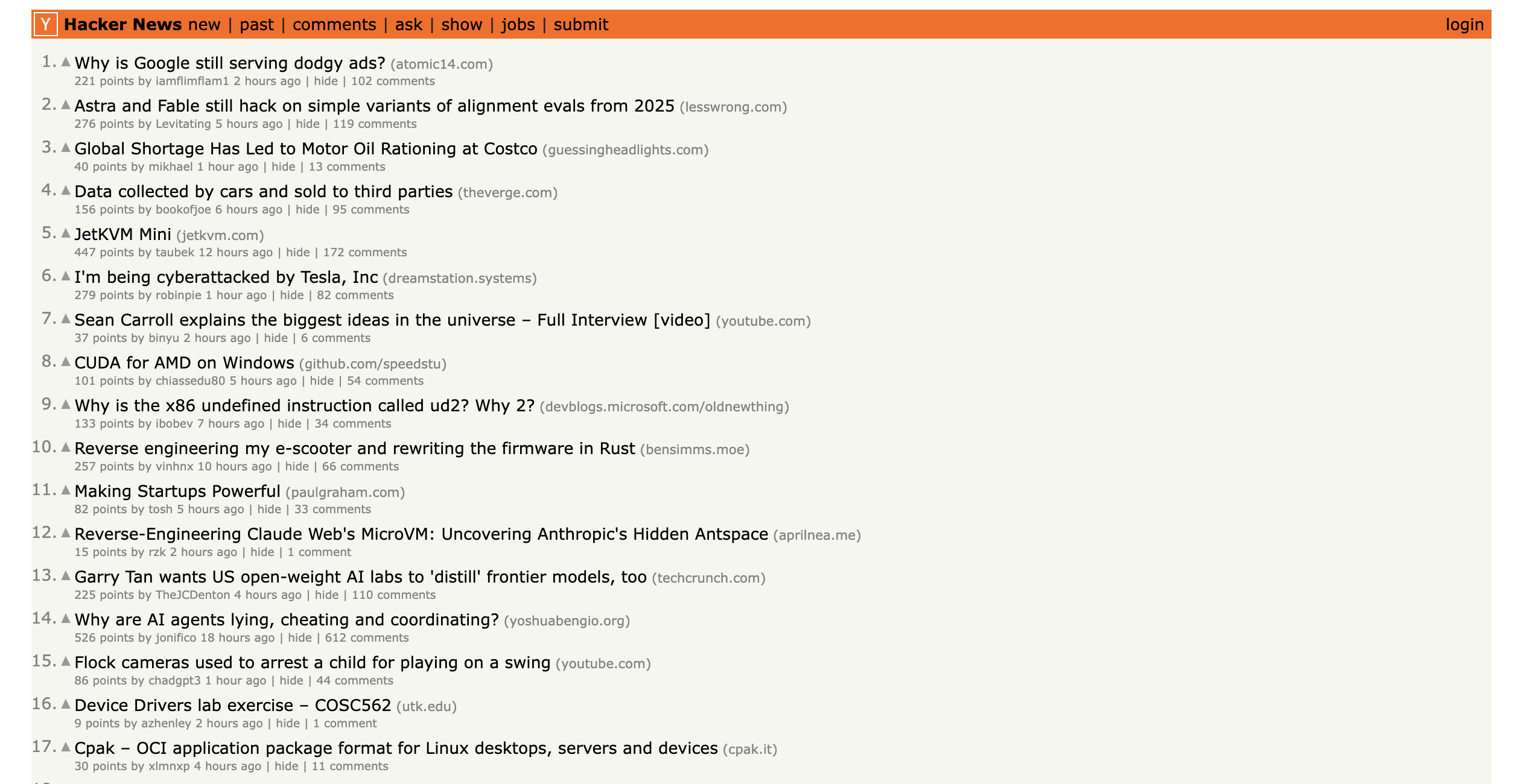
For developer tools and technical products, Show HN still has the highest ceiling of anything on this list — a front-page post can drive more qualified traffic in a day than most directories drive in a month. It's also the least forgiving: no submission queue, no roast-and-boost community softening the feedback, and absolutely nothing built in for what happens after the thread dies down. Treat it as a high-variance bet, not a reliable channel.
Frequently asked questions
Is Microlaunch worth it for a first launch?
Yes, if you want structured feedback over 30 days rather than a single make-or-break day. Just don't expect it to tell you what to do once the cohort ends — that part is on you.
Do I need to launch on all of these platforms?
No. Most founders get more out of three or four well-sequenced launches than ten simultaneous submissions competing for the same social-media asks. The sequencing matters more than the count.
What's the actual difference between a directory and SuperLaunch?
A directory answers "where do I list this?" SuperLaunch answers "what should my launch actually look like, in what order, and what should I skip?" — and only then helps you distribute it, including across directories like the ones above.
Which one should you actually use?
Realistically, this isn't an either/or decision — most founders get more out of a small, deliberately sequenced portfolio of launches than a single platform. The difference is whether that portfolio follows an actual plan or just becomes a checklist of forms to fill out in whatever order they come to mind. That's the gap SuperLaunch is built to close: use Launch Coach to figure out the sequence and priorities first, then use the directory and backlink list to execute across Microlaunch, Uneed, Peerlist, and the rest without duplicating effort or wasting a launch slot on the wrong channel.