7 TAAFT Alternatives for AI Tool Launches

If you built an AI product, There's An AI For That (TAAFT) is probably already on your radar. It's one of the biggest AI tool directories around, tracking hundreds of tools across dozens of categories since 2022.
But here's the problem nobody tells you before you submit: getting listed on TAAFT is not the same as getting users. The directory is huge, which means your tool is one listing among thousands. A submission there might get you a trickle of traffic and a backlink, but it won't build you an audience, generate feedback, or move you toward revenue on its own.
This guide covers two things. First, seven real alternatives to TAAFT, ranked by curation quality instead of raw traffic size. Second, and more important, what to actually do with a launch once you've picked your platforms, because listing your tool is the easy part. Getting users, feedback, search visibility, and eventually paying customers out of that listing is where most founders get stuck.
How we ranked these
Most "TAAFT alternatives" lists rank by traffic or domain authority. We ranked by something else: how much a curated, human-reviewed listing actually helps a small team stand out, versus how much it just adds your tool to a pile of thousands of others.
That's a different lens than "biggest audience wins," and it's why the order here won't match every other list you've seen.
1. SuperLaunch.io
Best for: founders who want editorial placement instead of a popularity contest.
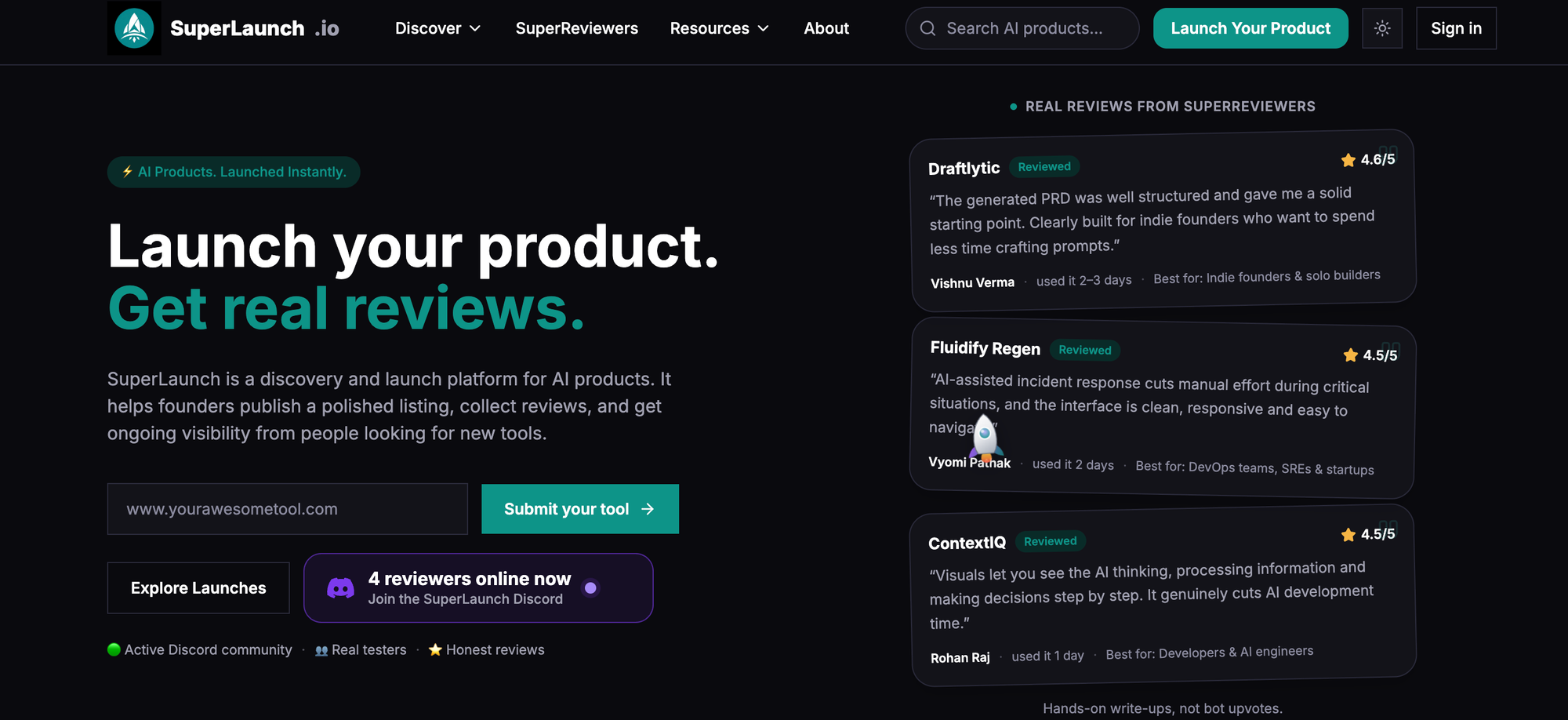
SuperLaunch works differently from most launch directories. There's no upvote race. A human editorial team reviews and ranks submissions, so your placement depends on the quality of what you built, not on how many people you can rally to click a button on launch day.
For AI and SaaS founders, this matters because upvote-based platforms often reward whoever has the biggest existing network, not the best product. If you're early stage and don't have a large following yet, a curation-first model gives you a more honest shot at visibility.
Trade-off worth knowing: SuperLaunch is newer and smaller than the directories with years of SEO authority behind them. If your goal is maximum raw traffic on day one, pair it with a bigger, more established platform. If your goal is a placement that actually reflects product quality and can be pointed to as social proof, it's worth the submission.
2. Uneed
Best for: consistent daily exposure to an engaged maker audience.
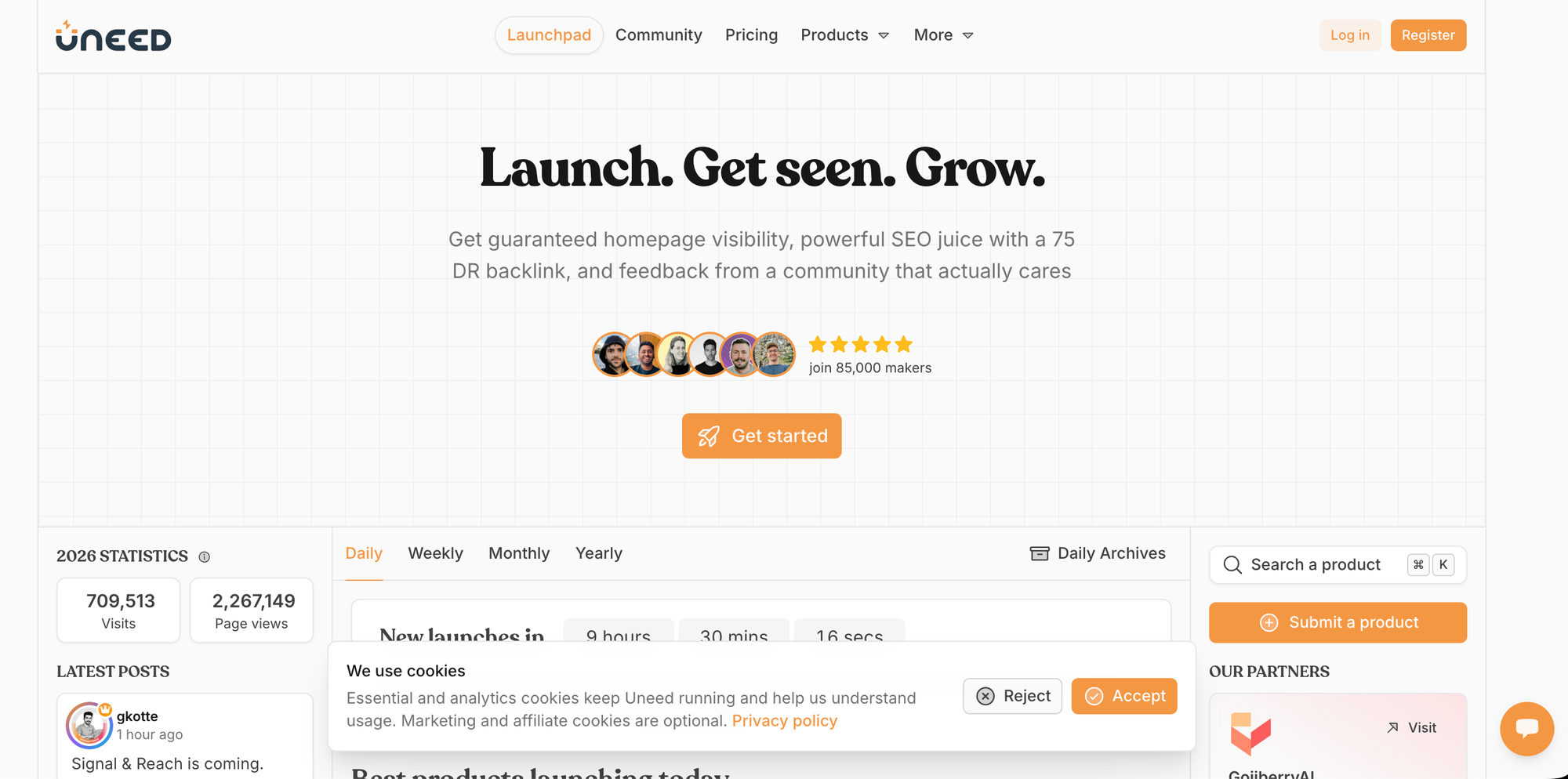
Uneed runs a curated daily launch board with real editorial review, not just an open queue. Its audience tends to be smaller than Product Hunt's but more engaged per visitor, which matters more for early feedback than raw numbers do.
Trade-off: the free plan caps you at one live product at a time, and the submission queue can run several weeks out. Plan ahead if you're timing a launch around a specific date.
3. Fazier
Best for: reaching an AI-specific audience without competing against every SaaS tool on the internet.
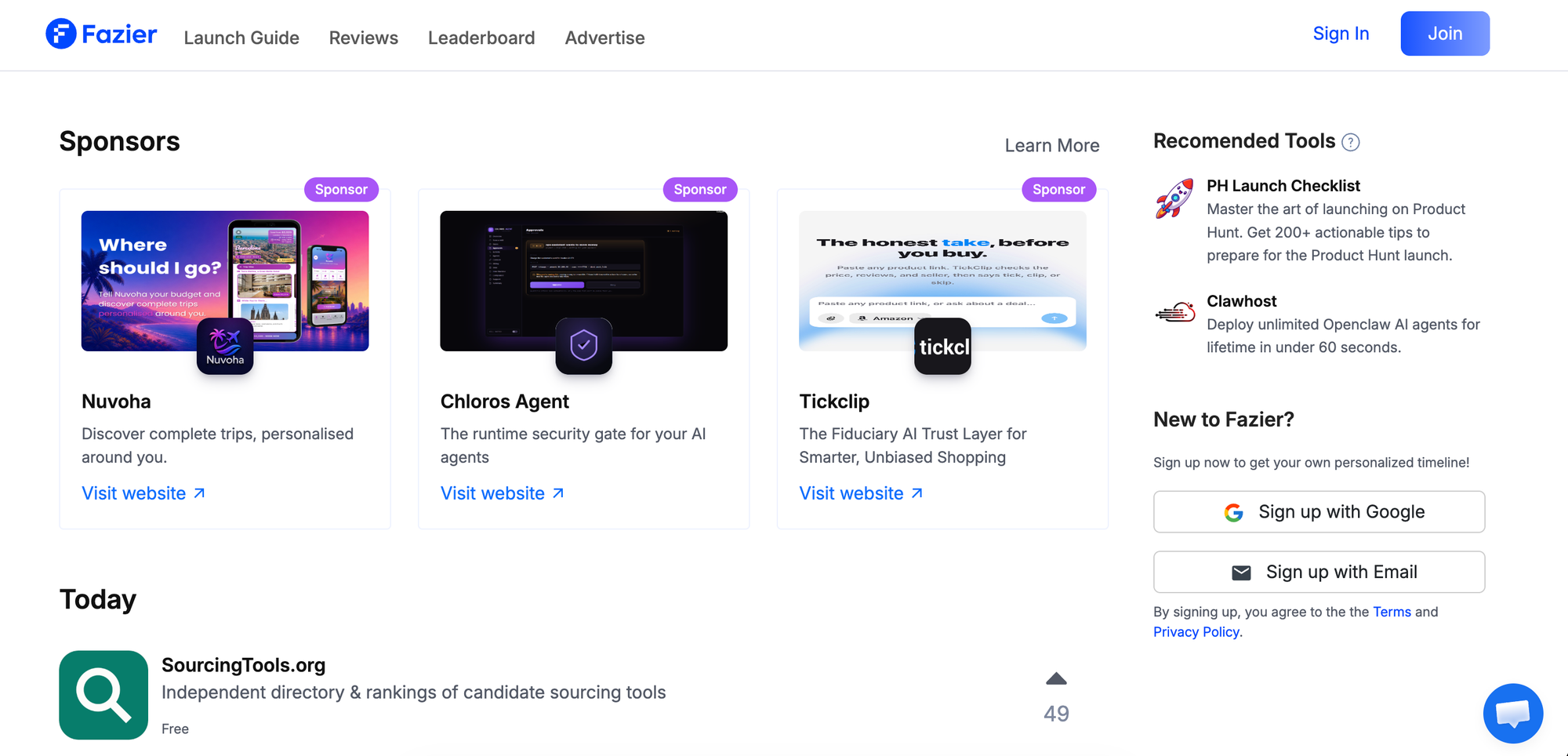
Fazier positions itself specifically for AI startups. It's less crowded than Product Hunt and better indexed for AI-specific search queries, so listings there tend to show up when people search for tools in your exact category.
Trade-off: Fazier runs on badges and leaderboards, which puts it closer to Product Hunt's gamified mechanics than to a fully curated model. You're still competing for visibility through engagement, not just product quality.
4. Futurepedia
Best for: long-term, search-driven discovery.
Futurepedia is one of the largest general AI tool directories, and its category pages rank well for a huge range of use-case searches. If someone searches "best AI tool for X," directories like this are often what shows up.
Trade-off: with that much volume, a single new listing can get lost. This works better as one piece of a broader discovery strategy than as a launch centerpiece.
5. Toolify.ai
Best for: the same reason as Futurepedia: scale and search footprint.
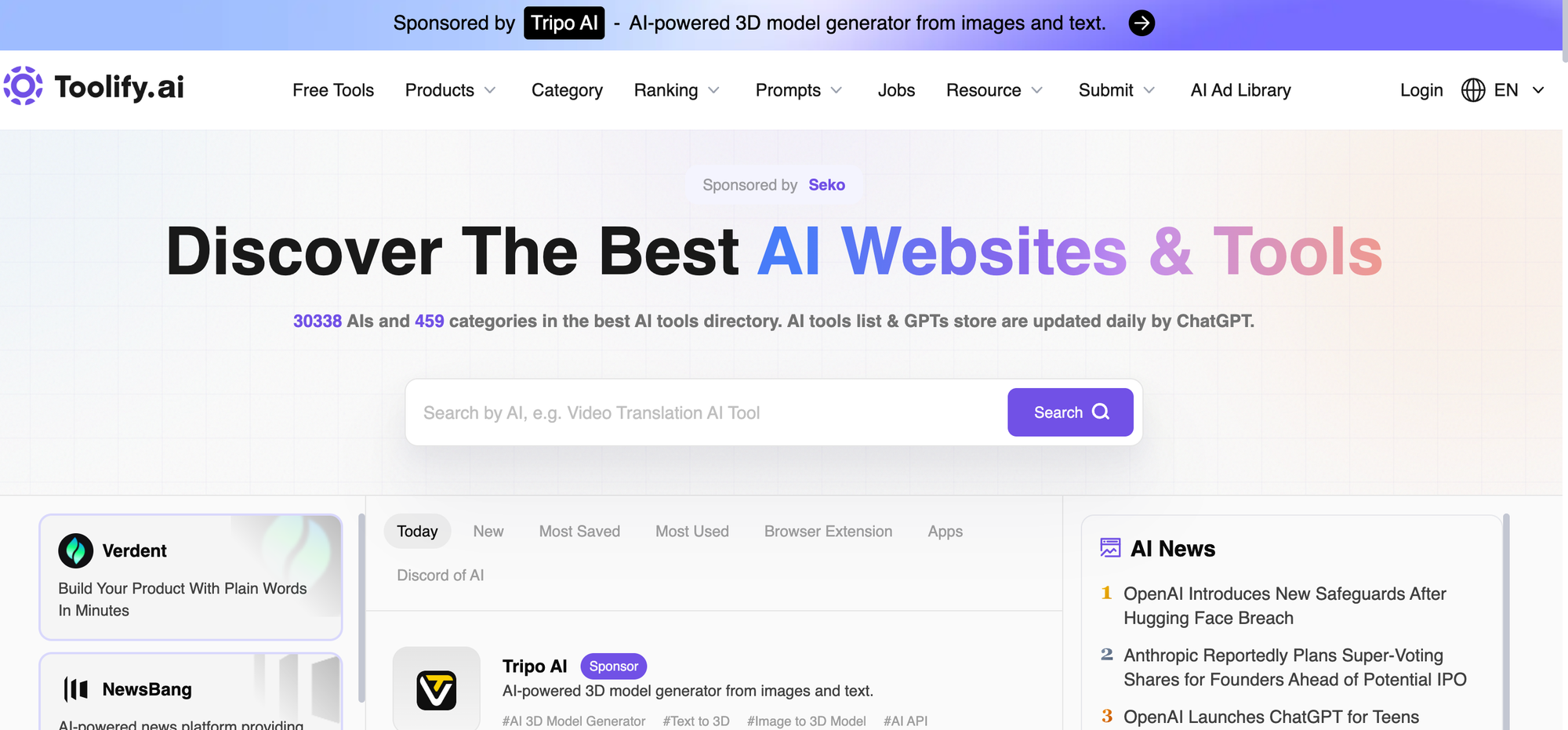
Toolify sits in the same tier as Futurepedia, another large-scale AI directory competing directly with TAAFT on breadth of listings.
Trade-off: same as above. High volume means low signal for any individual tool unless you're doing additional work to stand out (strong description, clear use case, good screenshots).
6. BetaList
Best for: validating before you've fully launched.
BetaList is built for a different stage entirely: pre-launch. If you're still collecting a waitlist or want early feedback before opening up to the public, this is the platform for that moment, not for a completed product launch.
Trade-off: you can only submit unreleased products. Once you're live, this door closes, so timing matters.
7. StartupBase
Best for: avoiding the launch-day lottery entirely.
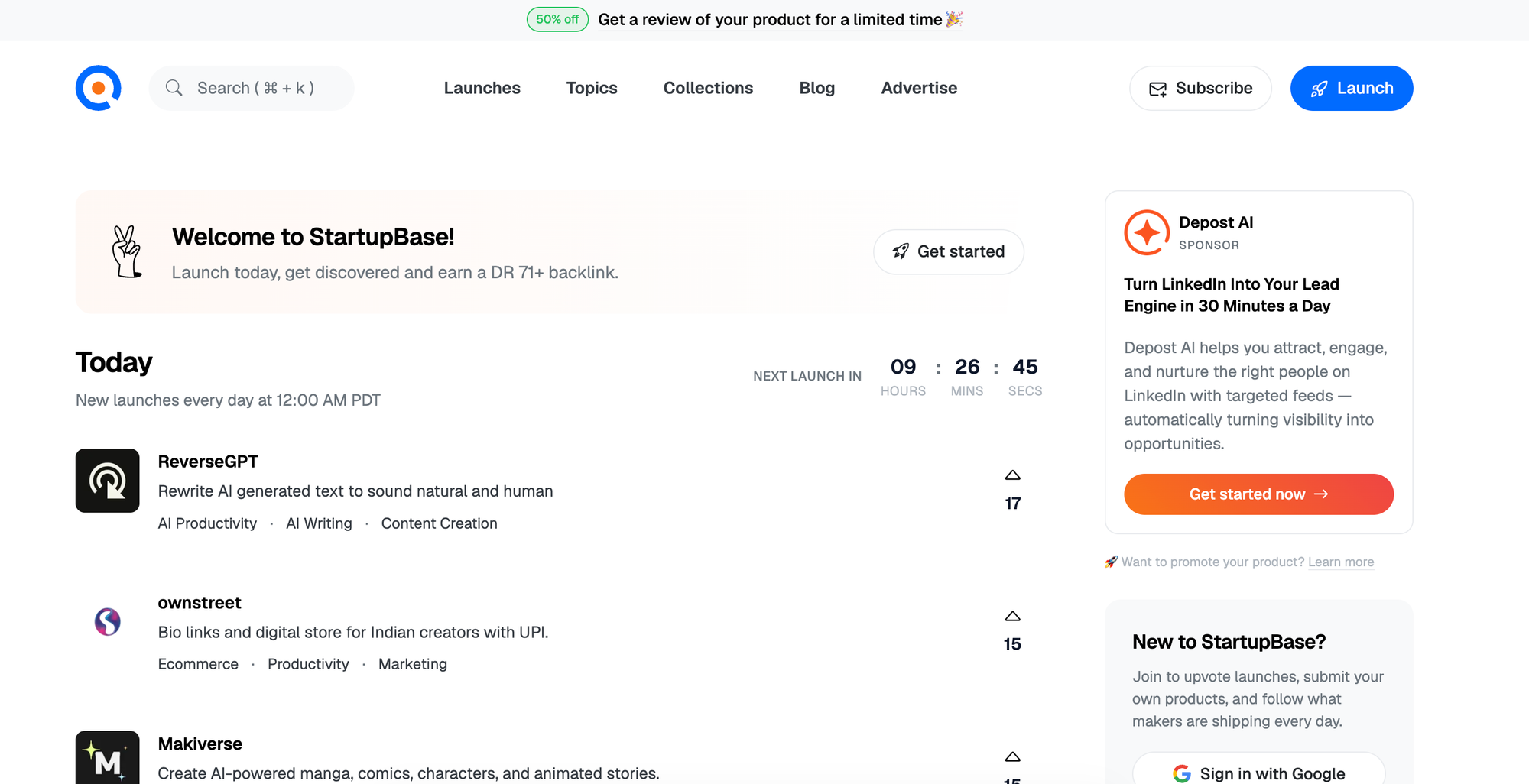
StartupBase guarantees a real launch spot for every approved product, instead of pitting you against everyone who happened to submit the same day. That structural difference makes it a lower-stress way to get a listing without needing a coordinated upvote push.
Trade-off: it's a newer platform, so it hasn't built the years of search authority that Futurepedia or TAAFT have. Treat it as a supplement, not a replacement, for the bigger directories.
Quick comparison
| Platform | Best For | Ranking Model | Product Stage |
|---|---|---|---|
| SuperLaunch | Editorial-quality placement | Human-curated, no upvotes | Live product |
| Uneed | Engaged daily audience | Curated queue | Live product |
| Fazier | AI-specific discovery | Gamified leaderboard | Live product |
| Futurepedia | Long-term SEO traffic | Directory listing | Live product |
| Toolify.ai | Long-term SEO traffic | Directory listing | Live product |
| BetaList | Pre-launch validation | Curated queue | Pre-launch only |
| StartupBase | Guaranteed launch spot | Approval-based | Live product |
What actually happens after you get listed
This is the part most "alternatives" articles skip. A directory listing is a distribution channel, not a growth strategy. Here's what to do with it.
Getting your first real users
Don't submit to all seven platforms in one day. Space them out over two to three weeks. Each listing gives you a fresh batch of visitors and a fresh reason to post about it on social, so staggering turns one launch into several small distribution moments instead of one spike that fades by morning.
Before you submit anywhere, have a single, specific line describing what your tool does and who it's for. Vague descriptions like "AI-powered productivity tool" get scrolled past. Specific ones like "turns your meeting recordings into a written project plan" get clicked.
Turning visitors into feedback
Every listing should point to a landing page with one clear action, not your homepage with five competing links. Add a simple feedback prompt on that page (a one-question form, or a link to a short survey) so early visitors can tell you what's confusing before you've spent months guessing.
Directories with human review, like Uneed and SuperLaunch, tend to send visitors who actually try the product rather than just click through. That makes them better sources of early feedback than high-volume directories, even if the total visitor count is smaller.
Building SEO and AEO visibility
Directory backlinks help, but they're not the whole SEO story. Two things matter more over time:
- Comparison and "alternative to" content. If your tool competes with an established name, write the honest comparison piece yourself, the way this article does for launch platforms. That content ranks for search terms your competitors won't optimize for, and it increasingly gets pulled into AI-generated answers on tools like ChatGPT and Perplexity.
- Category pages that mention you by name. Directories like Futurepedia and Toolify rank for thousands of use-case searches. Getting listed under the right category, with the right keywords in your description, matters more than the listing itself.
Getting to monetization
A launch doesn't need to convert to revenue immediately, and it usually won't. What it should do is build a list: an email list of early users, a group of people who gave feedback, and a small set of engaged users who'll tell you honestly whether they'd pay.
Track where your paying customers actually came from once you have a few. It's common to find that the platform that sent the least traffic sent the highest-quality leads. That's the number to optimize for going forward, not raw visitor count.
The bottom line
TAAFT is one directory in an increasingly crowded field, and it works best as one piece of a larger discovery strategy, not the whole plan. Pair a high-volume directory like Futurepedia with a curated one like SuperLaunch or Uneed, stagger your submissions, and treat each listing as a chance to collect feedback and build an audience, not just traffic for a day.
The tools that grow past their launch week are the ones that used it to learn something, not just to get a number on a leaderboard.